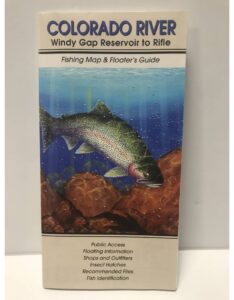
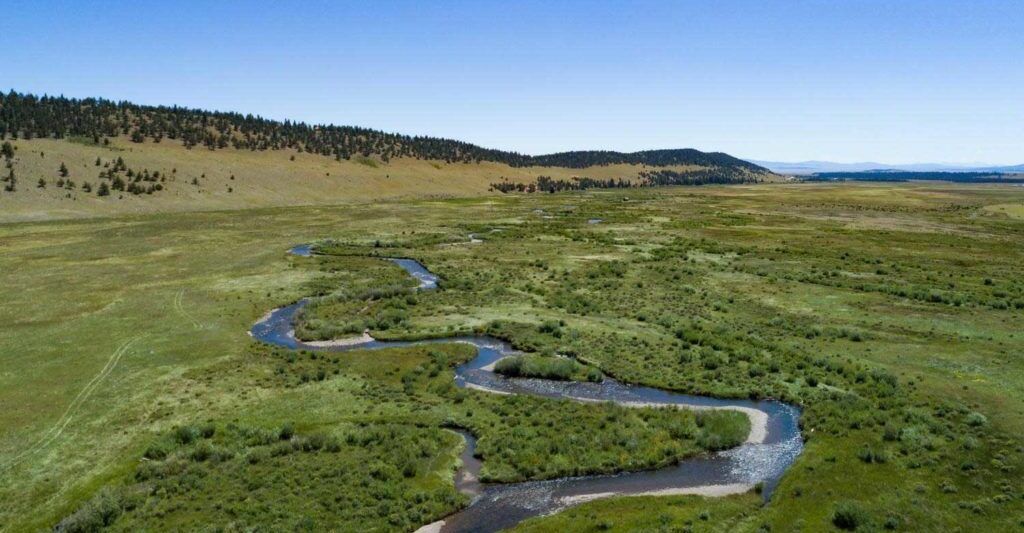
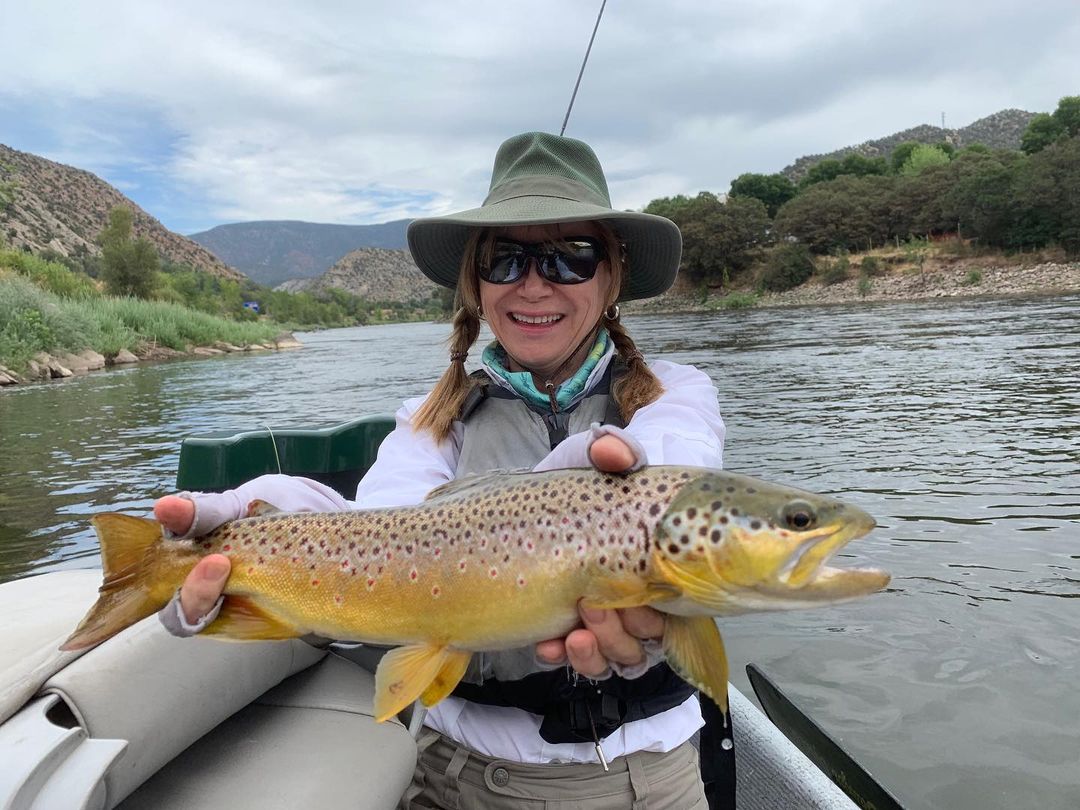
The Colorado River may be the most productive and diverse fishery in the state, with a healthy population of wild browns and rainbows all the way from the headwaters in the mountains near Grand Lake all the way through western Colorado, downstream of Rifle.
Colorado River Headwaters
Hot Sulpher Springs to Krembling
This Colorado River from Hot Sulphur Springs to Krembling is a large, freestone stream with shallow riffles and fast runs interspersed with long, slow glides and slicks. Just downstream of the town of Hot Sulpher, there is public access at the Hot Sulpher Springs State Wildlife Area (SWA). Below Hot Sulpher Springs, the river drops into Byers Canyon, 4 miles of deep, heavy-duty “pocket water”. While there is good access from several pull-offs on the highway, you have to scramble down about a hundred feet of boulders to get to the water. Below U.S. 40 at the downstream end of Byers Canyon, the river runs through Lone Buck SWA and then Kemp Breeze SWA, at the confluence of the Williams Fork River. From the town of Parshall, there is public access at the Sunset BLM Lease, Reeder Creek BLM Lease and Krembling BLM Lease, before the river joins the Blue River and drops in Gore Canyon (see next section).
Upper Colorado River AKA The “Upper C”
Pumphouse to Dotsero
Gore Canyon is a scenic piece of water for people looking for an adventure. Not for the faint of heart, Gore Canyon is accessed from Pumphouse Recreation Area, where there is a trail up into the wild canyon, featuring steep, fast rapids, riffles, & pocket-water.
The section from Pumphouse to Catamount can be waded successfully from various BLM public access points but has become famous (and popular) for its float fishing opportunities. In recent years, Colorado Parks and Wildlife studies have found 4000-5000 fish per mile! Rapids in this section are Class II or less (out of V) with short, moderate rapids when the river drops to “prime” floating levels (600 – 1000 CFS), typically in mid-August. Float fishing here also allows fishermen easy access to public water to stop and wade fish that is otherwise inaccessible. There are put-in and take-out points at Pumphouse, Radium, Rancho del Rio, State Bridge, Twin Bridges, Yellow Dog Ranch (our private put-in / take-out) and Catamount Bridge. This is a great place for anyone to begin their float fishing career.
Check out our River Float Trip
Below Catamount Bridge, Rodeo Rapid is a dangerous Class III Rapid that’s drop through large boulders and can present serious hazard and should be taken seriously. Below Rodeo Rapid, there are various put-in and take-outs, including Pinball, Horsecreek, Cottonwood, Lions Gulch and Dotsero.
Lower Colorado River
Grizzly Creek to Rifle
This section receives relatively light pressure, considering the fishing opportunities available. Floating is the best way to cover the water. There are put-in and take-outs at Grizzly Creek, South Canyon, Dino, New Castle, Silt and Rifle. Floating this section in the fall, when the water temperatures come down, can be especially rewarding.